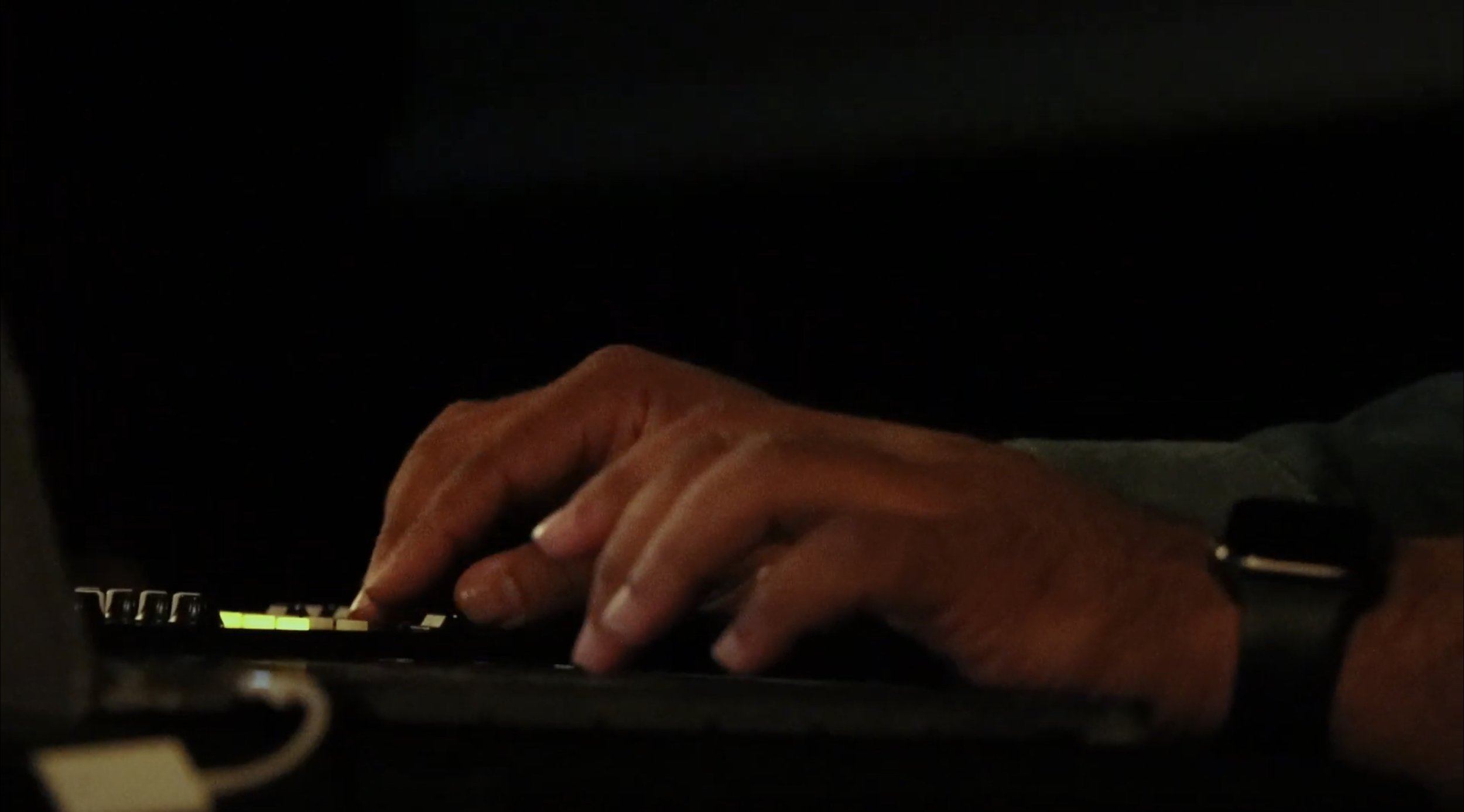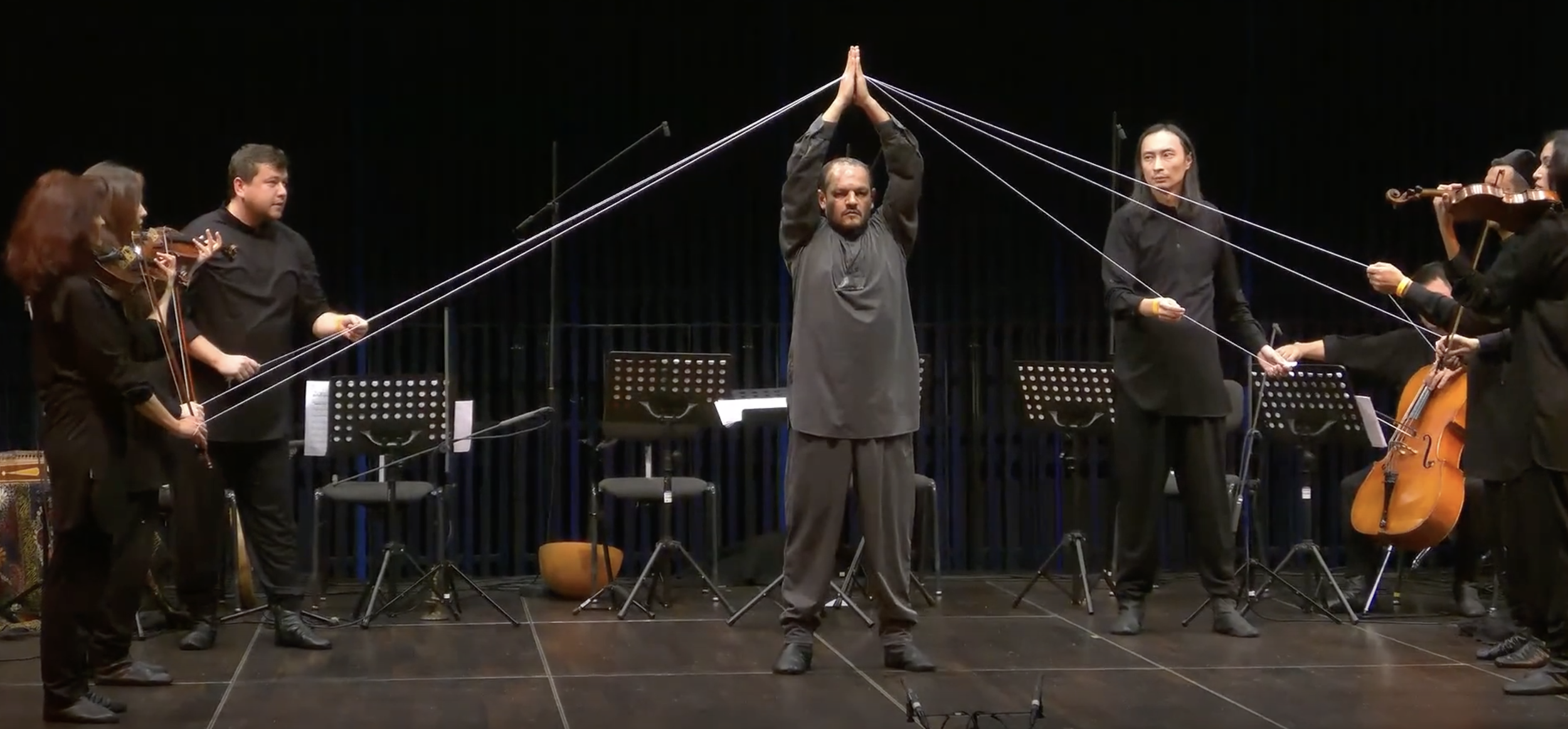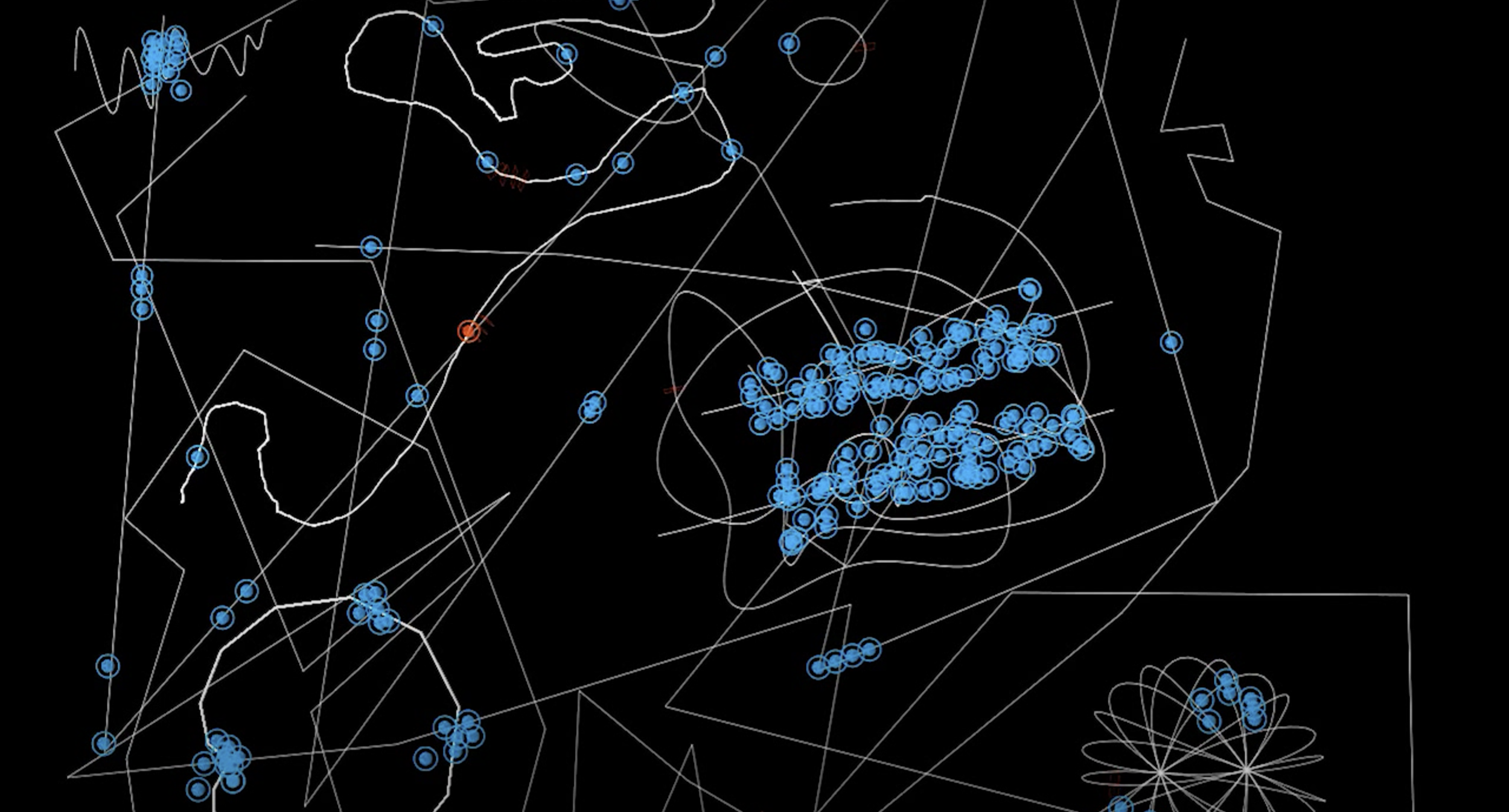
On May 10, I gave the closing performance as part of Tarek Atoui’s WITHIN sound project at the 2013 Sharjah Art Biennale. This performance came after my involvement in the TACET workshop and a workshop on sound archiving at the University of Sharjah (Khorfakkan Campus) and was very much my sonic take on those two projects.
Here is a photo followed by a sound recording of my performance, which was entitled The Emic: What Comes from Within, in which I used an electric oud, various handmade electronics, and a laptop.
Performance by Hasan Hujairi WITHIN, SB11 Music and Performance Programme, 2013 Image courtesy of Sharjah Art Foundation Photo by Alfredo Rubio
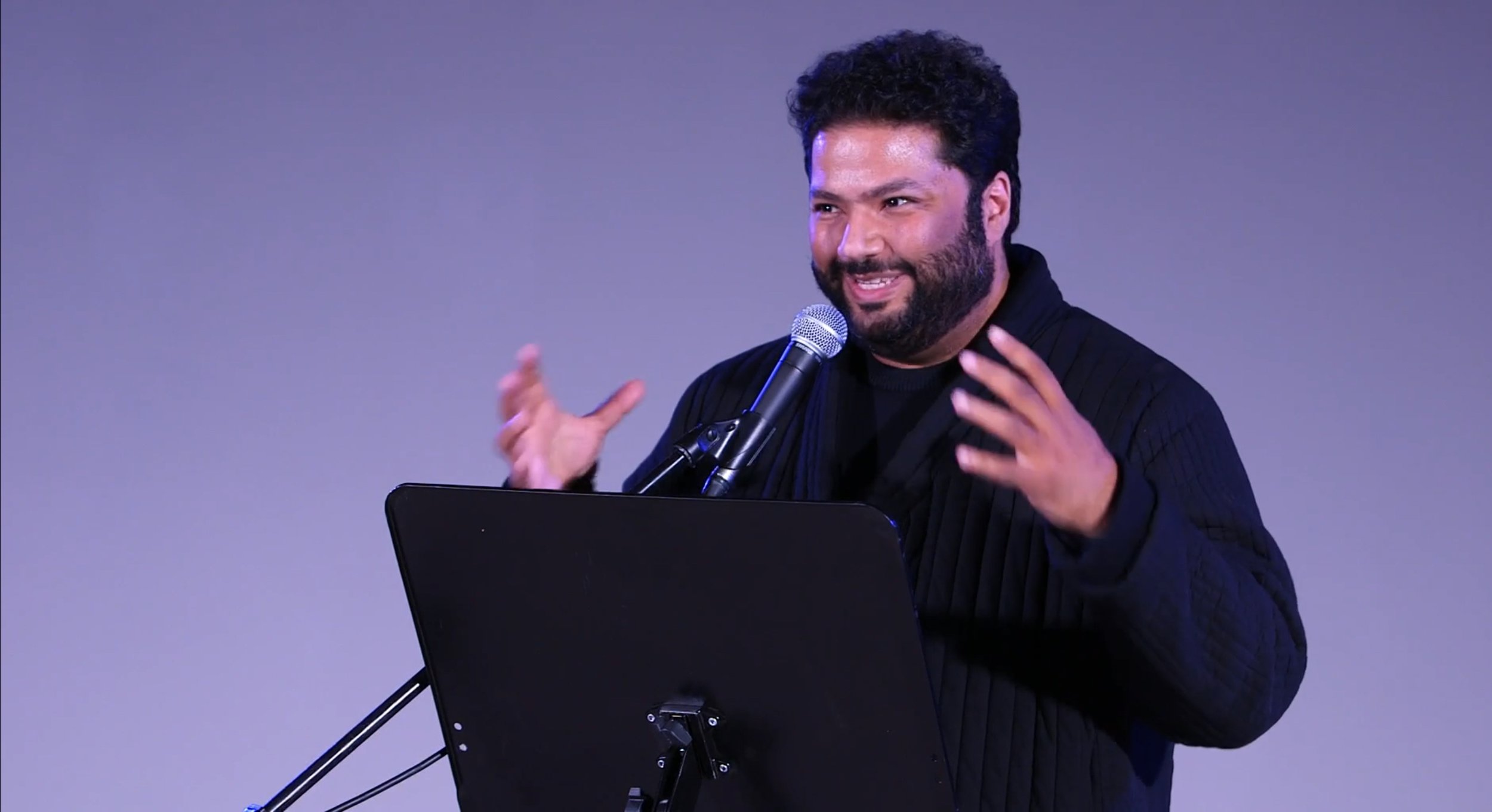
On May 12, I performed a short experimental music/sound art set with Sunghyun Cho at Space O’NewWall’s Mayfest in Seoul. Here is an image followed by the recording.
On May 11, I performed in a collaborative sound art set with Sunghyun Cho at Ipo Alternative Art Space in Mullae-dong, Seoul, South Korea. Here’s an image followed by a recording of how the performance went.
Earlier this evening, I participated in my first Pansori class. It was held at the National Theatre of Korea as part of an initiative to teach Korean music and dance to foreign residents. Since I am particularly interested in Korean traditional music, I decided to register. The following is a sonic documentation of how the class proceeded:
1. Our teacher first introduced herself and asked us to do the same. As the class was fairly large, this took up a considerable amount of time. Still, it was nice to learn of everyone’s different backgrounds and interests.
2. Our teacher then told us what we are required to prepare for class: a SOUND RECORDER and a PEN. As Pansori is taught aurally, we should record and play back to ourselves what we heard in class to practice on our own.
3. We were then given a short Pansori excerpt performance by our teacher as a way for us to know of what to expect.
4. She then explained that each province in the Korean peninsula has its own particular Arirang, which – as a folk song – was listed in the UNESCO Intangible Cultural Heritage of Humanity in December 2012.
5. We were next finally asked to produce our first Pansori-related sounds (although a lot of us struggled). The three tones were were asked to sing were the Central Tone, the Vibrato Tone, and the Gliding Tone. This was first done with all participating students singing together.
6. We then broke off into smaller groups of five to practice the three tones. Needless to say, a few minutes in, we started finding distraction elsewhere and made interesting small talk. Nevertheless, the singing we heard kept us going back to our task at hand.
7. After all groups practiced together, we were asked to sing together as one large group once again. At this point, everyone was much more relaxed and I think we sounded better in this attempt.
8. Our teacher gave us her concluding remarks along with what to expect in the next class. The reaction we make to her performance is priceless!
On several occasions I find myself confronting creative works that invite me to return to the thought process behind my suggested Post-Esoteric (Oriental) Art Music Manifesto. Now that I have relocated to Seoul (South Korea) as a doctorate student who occasionally works with elements of Korean traditional music, Middle Eastern traditional music, and electronic music, I am even more drawn to the idea of creating works in a sensibly and sensitively esoteric manner. This is based on my imagination of the “post-esoteric” as being something that simultaneously departs from and returns to its origin: the esoteric (in all its rhetorically glorified aura of mystery), albeit with an intellectual underpinning.
I have recently come across the following video by the late David Fanshawe (Wiki / Official Website) in which he narrates the story behind one of his most famous works, Arabian Fantasy, which is – to my surprise – “inspired” by my native Bahrain:
At first glance, I had mixed feelings about the narration and the context in which this work is presented by the composer. However, considering that this was made in the early 1970s, in which the circumstances of the time were completely different, I must admit that I have some respect for it. To put things in context, Edward Said’s Orientalism was not published until around 1977, after many major world events related to the Middle East had taken place since the time of this work. One must also understand that David Fanshawe’s previous experience with Bahrain had somewhat colonial undertones considering that his paternal uncle was Commodore T. Fanshawe who was stationed on the island. Again, this is all from a different time and different context.
From an ethnomusicological (and moral) angle, there are a few issues that trouble me: the ease in which Fanshawe narrates that the Arab tabla (and all this time, I thought that the tabla was native to the Indian subcontinent!) imitates the pace of a camel (this is the first I’ve ever heard of such a generalisation), with the “modern Western tuned drums” called boobams and a synthesizer played by Adrian Wagner, who just happens to be the great-great grandson of the Richard Wagner. He makes no mention of the sound samples of women ululating and what sounds like men yelling at their apprehensive camels to make them move faster – which are by today’s standards too much of a cliche and bordering the absurdly racist. Upon reflection, the fact that he combines an odd “Western” percussive instrument with the description of “modern” implies that the non-Western is by default not modern. The composer/narrator talks about how modern and traditional Bahrain is at the same time,while most of his focus is on rustic looking figures engaged in traditions that had long since died out and in some cases aren’t even native to the island of Bahrain. The sense of nostalgia towards the British naval presence in Bahrain (for someone from Bahrain living in 2013) is slightly disturbing as well. It also goes without saying that the title of the piece, “Arabian Fantasy”, is demeaningly orientalist. He even goes as far as to describe the work as a “symphony of pearls and oil”, even though it has very little connection with the conventional definition of a symphony, which is also a Western musical form to begin with.
One of the things that amused me was the fact that the sound of the oil pumps and their attached background noises were used. Again, this is a negative cliche (from my point of view) but I think that perhaps the oil pumps are something that native Bahrainis would not think much of when compared to some of the expat communities who were particularly intrenched in Bahrain’s oil industry. I imagine that David Fanshawe’s Bahraini soundscape was particularly punctuated by those oil pumps.
However, all things being said, I believe that this is definitely an interesting part of music history that is in a sense personal. It affords me to think again about my own practice and how I wish to forge my own approach that is both aesthetically present and intellectually sound.
I returned to Seoul, South Korea just a couple of days ago: this time as a PhD student at Seoul National University. I needed to mark today, February 17, sonically and visually, and so this is what I came up with:
A repeating improvised pattern played on a keyboard that makes way to itself in a granular timbre. I then drew this quick visual representation for those of you who are into that kind of thing.
As I prepare to relocate to Seoul in pursuit of my PhD studies at Seoul National University, I invite you to attend my final sound art/music performance in Bahrain for the foreseeable future. 8pm on February 12, 2013 (Tuesday) at abad/Albareh (Adliya, Bahrain).
What’s curious to me about this performance in particular is that after much deliberation, I will be presenting an electronic music set in which I stay away from my computer as a tool: I’ll be going back to the basics – an electric oud, some guitar effect pedals, and handmade electronics. As I work on developing some new works in the coming months, I feel excited about going back to what I see as “where it all started” for me.
Here’s what curator Mo Reda presents as a concept:
Preludes – Episode 3: “Analogues”
In this “Prelude” performance that can also be seen as a postlude of sorts, sound artist Hasan Hujairi presents a final sound art work through returning to the origins of his journey into experimental electronic music.
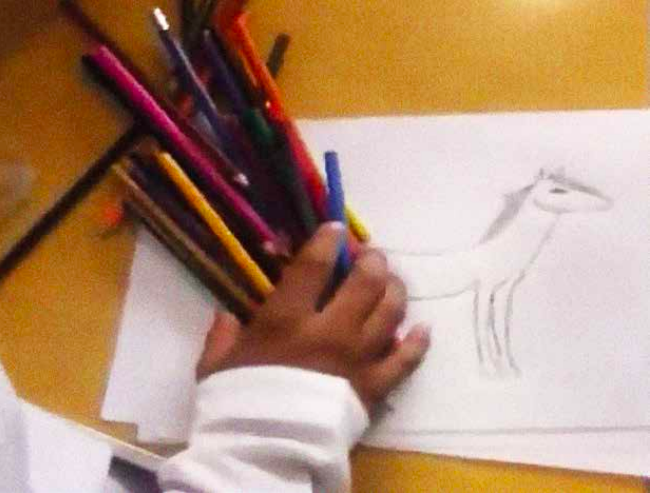
Earlier this evening, I led an improvised-drawing workshop alongside Dutch artist Mo Reda. In my segment, I played sounds to the workshop participants and asked them to interpret them through drawing on a reactive basis.
Sound from the workshop:
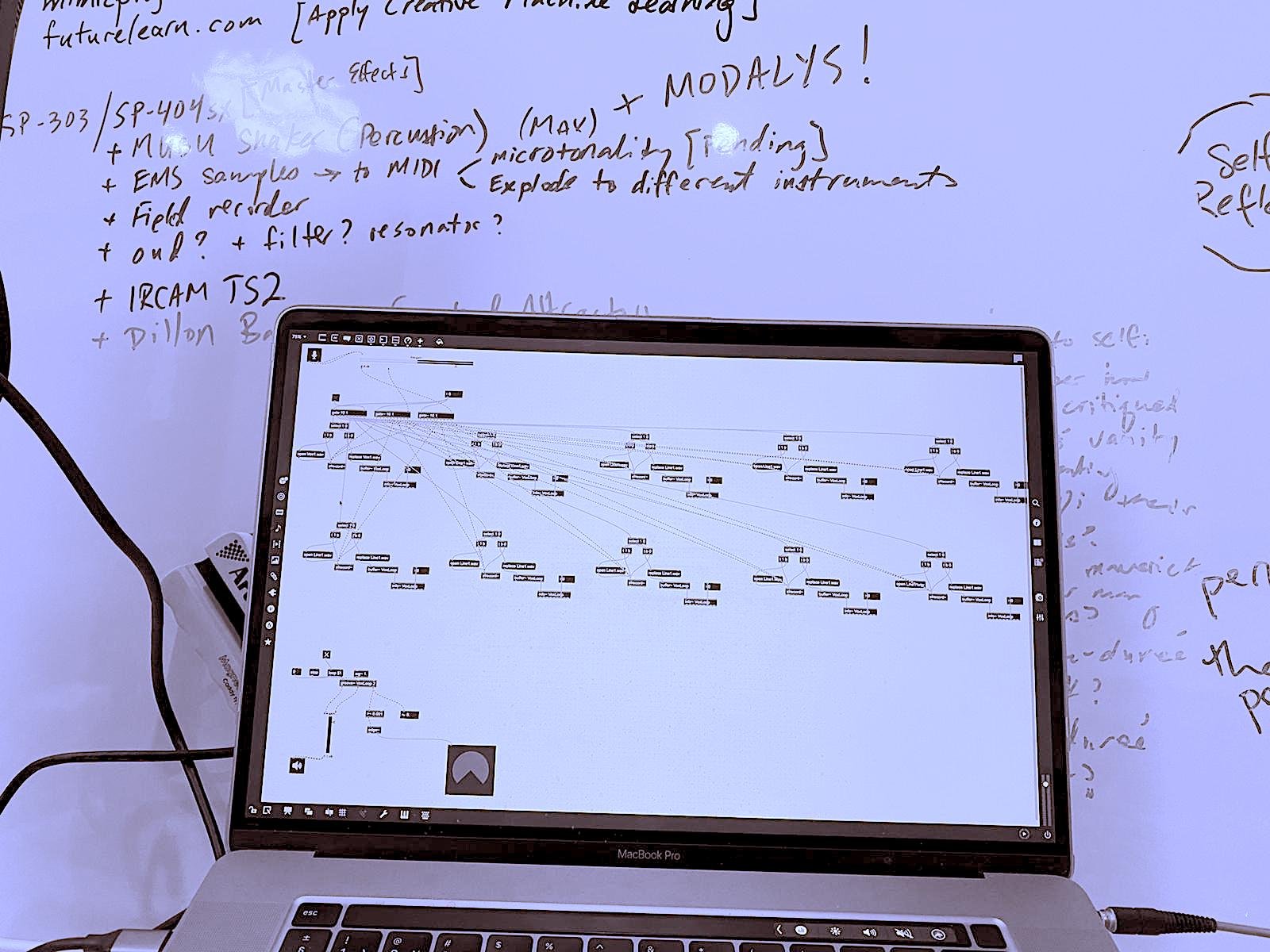
Set-up used to play sounds in an improvised drawing workshop
Here’s an EP I made this past week that’s barely 4 minutes in length spread over two tracks. You can either stream the tracks just below or Download EP #2013-1 .